


Green turtle
Chelonia mydas
Where to see it
Seagrass and reef off West Bay and West End, a short swim from the beach. Snorkelers meet them in every season.
When
All year; nesting roughly May to November
Status
Least Concern
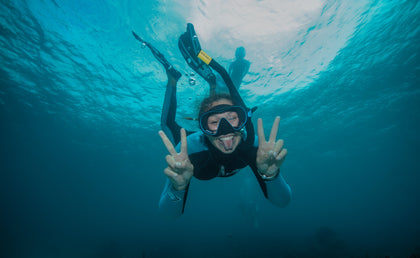
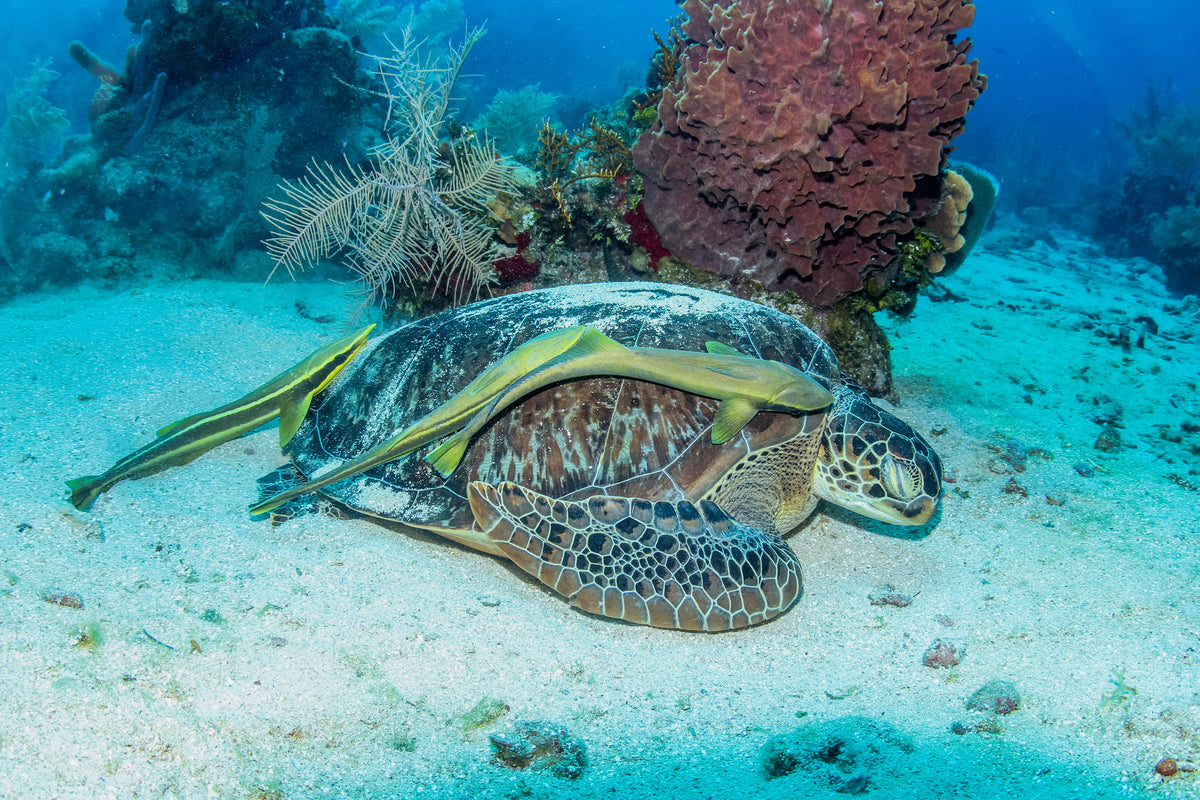
The turtle you are most likely to meet grazing the seagrass beds off West Bay and West End, a short swim from the sand. Adults are large, with a smooth, olive-brown shell; the name comes from the green color of their fat, not their shell. They feed on seagrass and algae and will tolerate a snorkeler who keeps a respectful distance and does not chase.
Globally the green turtle was moved from Endangered to Least Concern in 2025, one of the few conservation success stories of the decade, though regional populations still vary. Nesting on Roatan is small-scale and happens on the quieter beaches between roughly May and November. Touching, riding or crowding a turtle is illegal here; report nests to the Roatan Marine Park.